
Design and installation guide
Sustainable fire protection throughout the lifecycle
We approach sustainable fire protection through suitable product selection, regular inspection, maintenance and responsibility after use. Each environmental property is assessed against its product documentation and application conditions. Maintaining reliable protection throughout service life is central to this approach.
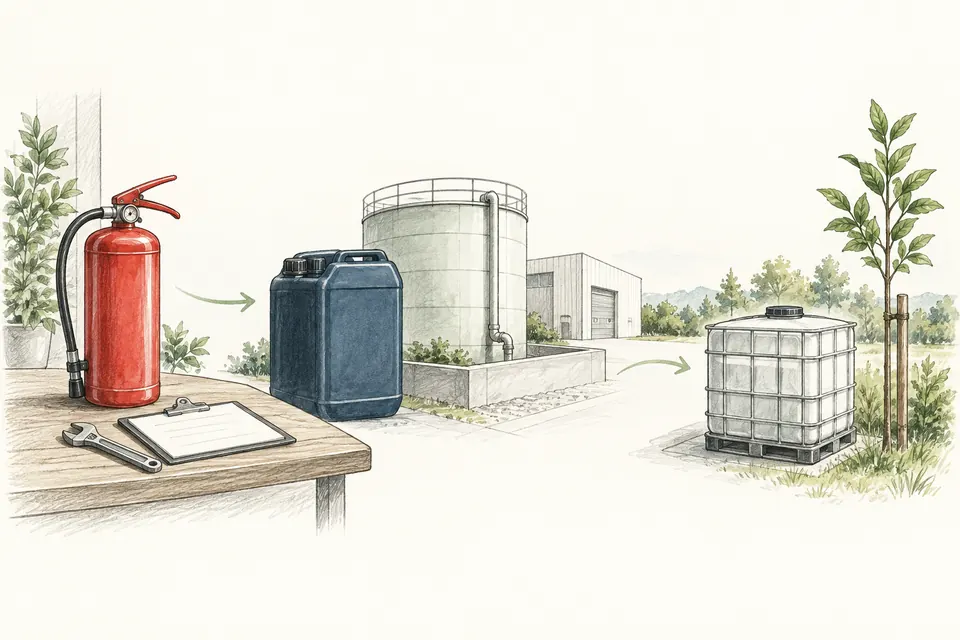
At Özkartay, protection is planned from risk assessment, design, installation and commissioning through maintenance, agent replacement and end-of-life handling. Technical suitability, resource use and traceable records belong to the same lifecycle, bringing future operating needs into today’s design.
01
From product selection to end-of-life handling
Sustainability is an operating approach that continues after handover. Changes to the facility lead to coordinated updates of hazards, protection arrangements and environmental records.
Documented, appropriate product selection
Suitable agents, hardware and design criteria are selected for the material and enclosure. Assessment covers fuel, concentration and hardware for NFF; agent properties and enclosure conditions for gas; and tested applications for water mist. The product and combination covered by EN, UL or FM evidence are recorded.
Regular inspection, maintenance and leak management
Detection, control, agent storage, piping and discharge devices are checked under manufacturer programmes. Pressure loss, leaks, faults and false-alarm causes are assessed, followed by necessary functional verification. Changes to rooms, fuels or processes may require review of the protection design.
Responsibility after use and waste management
Discharge or replacement requires defined handling of residues, contaminated water and equipment. Suitable gas recovery, controlled foam collection and licensed waste treatment where needed are planned. Equipment reuse follows technical assessment, while recycling considers contamination and applicable requirements.
Evidence, records and continuous improvement
Product data, SDS, installation drawings and testing/maintenance reports form the facility records. Agent and equipment changes are tracked, with environmental objectives assessed through measurable project data. LEED/BREEAM objectives and environmental-management needs are matched to the relevant teams’ evidence requirements and criteria.
02
Practices that support the lifecycle
Product selection, inspection and after-use management have distinct decision points. The basis of each decision and follow-up checks are made visible in handover records.
Suitable agents and hardware
- NFF/F3 and model documentation
- For foams documented without intentionally added PFAS, actual fuel, water and concentration are verified. Relevant EN 1568 parts and UL/FM combinations are checked by model. Environmental results are assessed under their test conditions, with legacy residues and hardware compatibility reviewed during replacement.
- Inert gases and FK-5-1-12
- ODP/GWP data follow product evidence, while agent quantity and discharge follow system design. IG-100, IG-55 and IG-541 have different compositions; IG-541 includes carbon dioxide. Occupancy, evacuation, room integrity and pressure management inform clean-agent selection.
- Water mist and calculated resource demand
- In suitable tested hazards, water mist uses fine-droplet cooling and evaporation. Water demand, nozzle arrangement and duration are calculated for the selected system. Savings and reduced secondary water damage are assessed on an equivalent protection basis rather than applying one percentage to every project.
Inspection, testing and storage
- Reducing unintended discharge risk
- Detector layout, cause-and-effect logic and control panels are matched to the hazard. Cross-zone verification is used where required or appropriate for the design and standard. Functional checks of alarms, faults and release circuits are planned alongside personnel training.
- Puff, pipe testing and Door Fan
- Puff checks assess flow paths and cleanliness, pipe leak tests assess piping leakage, and Door Fan predicts agent retention from air leakage. Results are reported separately. Suitable methods reduce unnecessary agent discharge, with other required acceptance and functional tests following system and project procedures.
- Storage and containment
- Foam packaging or tanks follow material compatibility and manufacturer temperature requirements. IBCs, polyethylene containers and metal tanks are assessed using product and equipment evidence. Gas cylinders follow pressure and periodic-inspection requirements, with controls for leaks, contamination and mixing.
After-use and evidence management
- Planning gas recovery
- Replacement work identifies the remaining gas, quantity and condition. Applicable recovery and F-gas requirements are assessed for agents such as HFC-227ea/FM-200. Suitable closed-system equipment, competent personnel and required authorisations support selection of reuse, recovery or disposal, with documented handling.
- Waste separation and material recycling
- Unsuitable or contaminated concentrate, residues and packaging receive appropriate waste classification and handling. Reuse or recycling of steel cylinders, brass valves and metal pipes considers technical condition and contamination. Authorised provider transfer records are linked to maintenance and replacement records.
- LEED, BREEAM and environmental management
- Product data, calculations and installation evidence needed for building objectives are agreed with the project team. Credits and certification depend on scheme criteria and whole-building assessment. ISO 14001 addresses organisational environmental management; product performance evidence, SDS and building certification have separate scopes.
03
Decision points in the facility lifecycle
Initial installation, operation and replacement require different information. Each stage provides the basis for the next check.
New projects and commissioning
- Stage requirement
- Hazards, agents, equipment, resource demand and acceptance plans are defined.
- Practice and records
- Documented selection, calculations and separate test reports establish handover evidence.
Operation and periodic maintenance
- Stage requirement
- Leakage, agent condition, faults and facility changes are monitored.
- Practice and records
- Manufacturer-aligned checks, repair verification and current records support continued service.
Agent replacement and end of life
- Stage requirement
- Appropriate handling is assessed for legacy agent, residues and equipment.
- Practice and records
- Controlled collection, required authorised treatment, material assessment and verification of the new system are coordinated.
04
Checks for sustainability and green-building objectives
Scroll the table horizontally to view every column.
| Parameter | Information to assess | Özkartay approach |
|---|---|---|
| Agent selection | Actual hazards, agent properties and hardware. | Suitable NFF, inert gas, FK-5-1-12 or another documented protection solution. |
| Product and environmental evidence | Technical data, SDS, performance and environmental test scope. | Verify EN/UL/FM product scope separately from environmental results. |
| Site testing | Flow, piping leakage, enclosure retention and function. | A manufacturer-aligned acceptance plan using puff, pipe testing and Door Fan. |
| Water and agent use | Flow, duration, unintended release and collection needs. | Project calculations, suitable water mist, alarm verification and controlled testing. |
| Recovery and waste | Agent identity/condition, authorisations and handling route. | Suitable equipment, authorised handling and traceable transfer records. |
| LEED/BREEAM and environmental management | Project criteria and organisation evidence scope. | Assessment with the building team, distinguishing product, management-system and building evidence. |
Water savings follow project data, environmental properties the selected product, and LEED/BREEAM contribution the relevant building criteria. Records support tracking of operational and after-use responsibility.
Assess your fire hazards, maintenance needs and sustainability objectives together. Bring suitable product selection, regular inspection and responsibility after use into one lifecycle plan.