
Design and installation guide
Medium-expansion foam suppression systems
Production facilities, petrochemical sites and storage areas handle Class B liquids such as petrol, diesel, crude oil, solvents and alcohol, each presenting different fire hazards. The suppression method is selected for the chemical properties of the liquid. Many hydrocarbons are lighter than water, and unsuitable water-jet application can spread the fuel. Water-miscible polar solvents require separate assessment of foam and fuel compatibility.
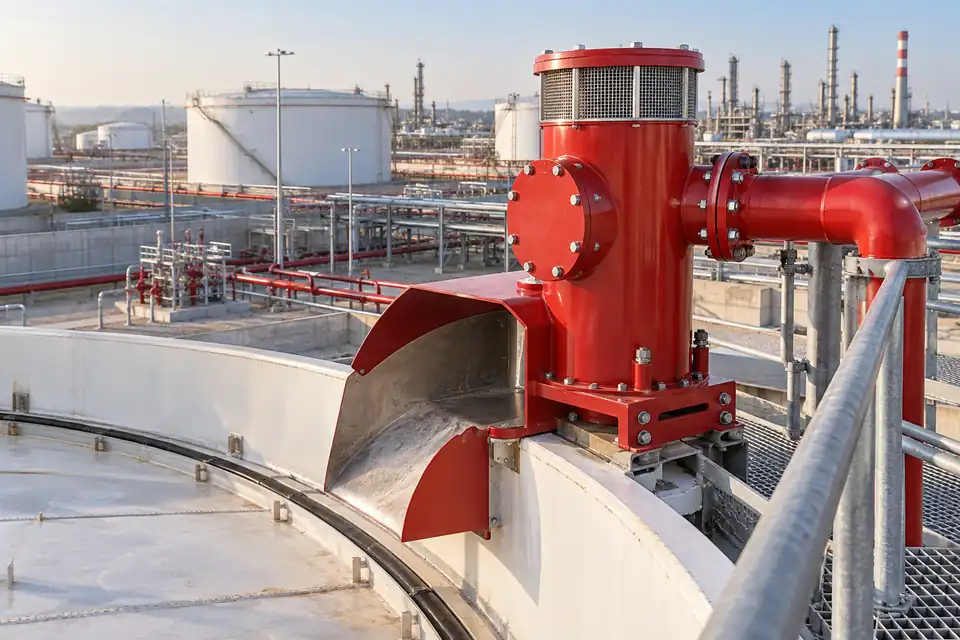
Medium-expansion foam is considered for covering spill and containment areas with a more voluminous blanket. Suitable generators, pourers or branchpipes are selected together with the concentrate, air intake, discharge height and delivery conditions at the fuel surface.
01
Expansion ratio and suppression mechanism
Expansion ratio is the volume of finished foam divided by the original foam-solution volume. For example, 20 litres of foam produced from 1 litre of solution represents an expansion ratio of 20:1.
Medium expansion: the 20:1–200:1 range
A lighter, more voluminous structure is used to cover spill surfaces with a substantial foam layer. Application is generally local or close to the surface. Actual expansion depends on concentrate, generator, air intake and operating conditions.
Blanketing and smothering
A continuous blanket limits contact between the fuel surface and air. Application is planned to maintain blanket continuity and avoid unnecessary disturbance of the fuel.
Cooling
Water contained in the foam absorbs heat from the fuel and surrounding hot surfaces. Cooling performance is assessed using the applied solution quantity, surface temperature and contact conditions.
Vapour suppression and reignition control
A stable layer helps reduce the release of flammable vapours from the surface. Blanket disruption, hot surfaces and fuel movement are included in assessment of reignition risk.
02
System components and engineering details
Concentrate and proportioning arrangements are assessed against the documented operating range of the medium-expansion generator, pourer or branchpipe. Air intake, foam output and local discharge conditions form part of the layout design.
Foam concentrates and fuel compatibility
- AFFF
- AFFF is a fluorinated foam family capable of forming an aqueous film on suitable hydrocarbon fuels. The product and application scope are matched to its data sheet.
- AFFF-AR and alcohol-resistant products
- Alcohol-resistant products compatible with the fuel are selected for polar-solvent hazards such as alcohols, esters and ketones. Barrier formation and application method are assessed against the documented fuel scope of the concentrate.
- NFF / F3 / SFFF
- Suitable non-fluorinated options are assessed for new systems and conversions. Manufacturer statements of no intentionally added PFAS are considered alongside fuel compatibility, the SDS and hardware tests. Polar solvents require a suitable alcohol-resistant NFF product.
Discharge and application equipment
- Medium-expansion equipment
- Medium-expansion generators, suitable pourers and hand-held branchpipes apply foam to spill or containment areas. Discharge height, air intake and the route to the fuel surface are established in the design.
Supply, proportioning and control
- Water and concentrate supply
- The water source, concentrate tank and proportioner are selected for design flow. Concentration, discharge duration and the required concentrate quantity are calculated for the product and project requirements.
- Hydraulic calculation and layout
- Pipe diameters, pressure losses, application area and discharge-device demand are calculated together. Monitor reach or foam depth is verified using selected equipment data.
- Detection, testing and management after use
- Automatic detection or control sequences, maintenance access and functional tests are planned. Collection of used foam and contaminated firefighting water is included in facility environmental management.
03
Applications and facility-specific arrangements
Expansion class is selected together with liquid type and storage geometry. Wind in open areas and ventilation indoors influence the application method.
Tank spill and bund areas
- Hazard and site requirement
- Fuel accumulation around tanks, the spill surface and vapour release.
- Application approach
- Surface coverage is planned using a suitable medium-expansion generator or pourer. Area, drainage, application flow and required foam depth are determined together.
Chemical storage and process areas
- Hazard and site requirement
- Polar solvents, spill channels, containment areas and formation of flammable vapours.
- Application approach
- Fuel-compatible concentrate, including alcohol-resistant NFF where needed, is matched to suitable expansion equipment. Foam coverage is planned together with ventilation and other hazard controls.
04
Comparison of low- and medium-expansion systems
Scroll the table horizontally to view every column.
| Technical parameter | Low expansion | Medium expansion |
|---|---|---|
| Expansion ratio | Up to 20:1; approximately the 1:1–20:1 range. | Approximately the 20:1–200:1 range. |
| Foam structure | Denser and more fluid, with higher water content. | Lighter, bulkier and sponge-like. |
| Wind and outdoor conditions | Assessed for outdoor application; wind effects are considered. | More sensitive to air currents because of its lighter structure. |
| Reach and application distance | Depends on monitor/nozzle selection, flow and pressure. | Generally local discharge or application close to the surface. |
| Suppression approach | Surface blanketing, cooling and vapour suppression. | Deep surface blanketing and voluminous spill coverage. |
| Typical equipment | Foam chamber, rimseal nozzle, monitor and suitable sprinkler. | Medium-expansion generator, suitable pourer and branchpipe. |
| Application area | Fuel tanks, jetties and loading gantries. | Tank bunds and suitable chemical spill areas. |
Expansion values describe classes rather than product performance, fixed reach or application flow. Actual operating values for concentrate and hardware are established using the selected system documentation.
Share your spill and containment-area information so we can assess medium-expansion coverage together with the geometry, fuel and suitable equipment.