
A process-led view
The review covers production processes, shift patterns, chemical reactions and machine operating conditions as well as the building itself.
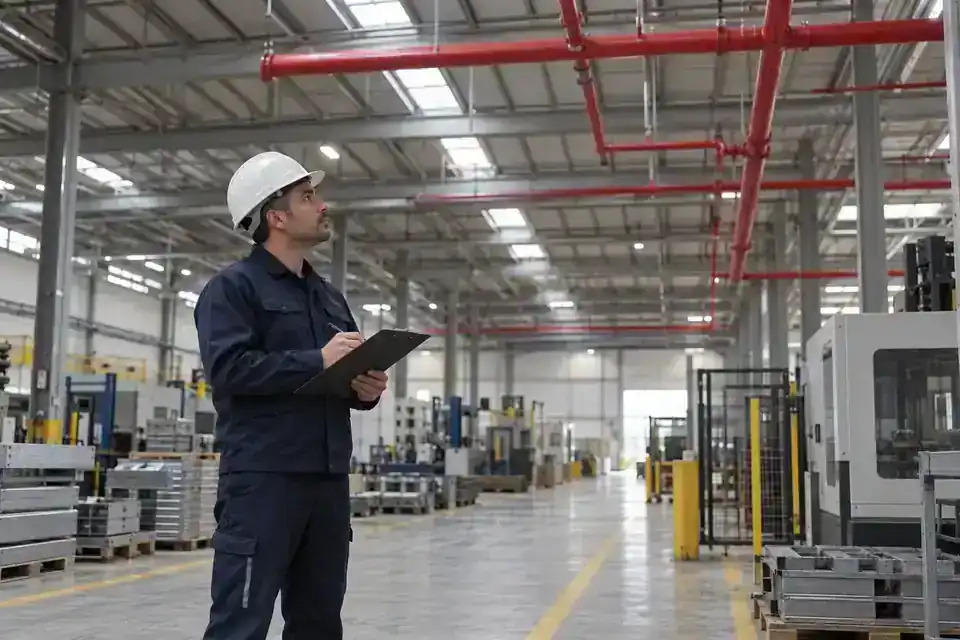
We analyse the facility’s processes, operating conditions and existing fire-safety infrastructure on site, then report risk priorities in detail.
Field and engineering
Fire risk assessment is one of the most critical engineering and occupational-safety activities for protecting people, preventing material losses and maintaining business continuity. An effective assessment goes beyond desk-based checks: it examines the facility’s processes, operating conditions and existing fire-safety infrastructure on site, then reports risk priorities using concrete evidence.
01
The assessment follows a systematic, staged methodology:
We review architectural drawings, emergency plans, electrical installation compliance reports, Material Safety Data Sheets (MSDS) and existing fire-system schematics.
Our specialists inspect production lines, storage areas, electrical panels and emergency escape routes on site.
Combustible materials (gas, liquid and solid) are matched with possible ignition sources such as hot surfaces, electrical sparks, static electricity and friction.
We test and assess the technical adequacy of fire detection and alarm systems, automatic suppression systems (sprinkler, gaseous and foam), smoke vents and fire doors.
Identified risks are rated and reported using the Fine-Kinney, 5×5 matrix or NFPA methods, considering likelihood and potential impact.
Short-, medium- and long-term improvement actions are defined to address the identified gaps.
02
The validity of the assessment depends on the critical parameters reviewed in the field:
The review covers production processes, shift patterns, chemical reactions and machine operating conditions as well as the building itself.
The assessment is based on the applicable Turkish fire-protection regulation and supported by standards such as NFPA, EN and FM Global.
We check whether suppression, detection, ventilation and building-automation systems work together in an integrated and synchronised way.
Toxic gas release, ATEX explosion risk and environmental or operational effects such as extinguishing water entering drainage systems are also considered.
The review considers emergency awareness, response-team competence and the regularity of evacuation drills alongside the availability of equipment.
03
Fire load, ignition dynamics and protection needs vary significantly between industries.
04
| Facility type | Main fire risk | Priority detection | Recommended suppression |
|---|---|---|---|
| Production facility | Heat, friction and dust explosion | Heat and spark detectors | Local CO₂ / water sprinkler |
| Logistics warehouses | Vertical fire spread and high fire load | VESDA active air sampling | ESFR and in-rack sprinklers |
| Chemical / petrochemical | Flammable liquid or gas explosion | Ex-proof flame and gas detectors | Automatic foam suppression |
| Data centres | Electrical arc and electronic equipment loss | High-sensitivity smoke detectors | Clean-agent suppression (FK-5-1-12) |
An effective fire risk assessment is a living process that follows the facility’s changing operation. Every process change, new machine or area expansion should trigger an update to the risk-assessment report so emergency management and facility safety remain aligned.