
Response and evacuation limits
Teach withdrawal and alarm priorities when fire grows, smoke is dense or escape is unsafe. Exercises are planned to avoid exposing participants to danger.
Support emergency readiness with training, evacuation scenarios and assessment records tailored to facility risks and staff roles.
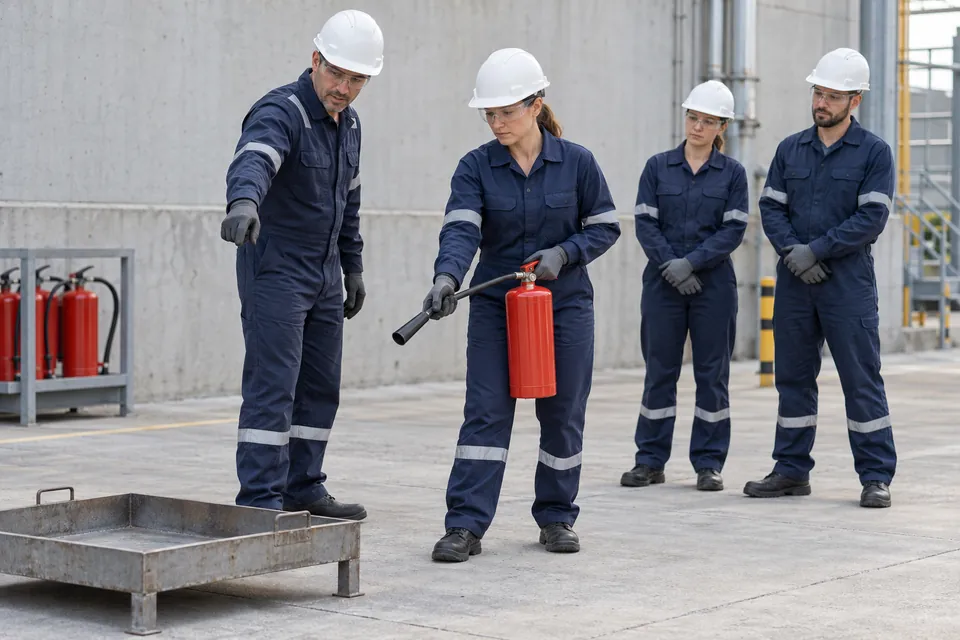
On-site fire training and emergency management
Emergency readiness improves when staff recognise alarms, understand their roles and can follow safe evacuation steps. Özkartay prepares briefings, controlled practice and assessments around site risks and shift patterns. Training makes the limits of first response and the priorities of professional assistance and evacuation clear.
01
Connect the existing emergency plan with actions in the facility.
Review site hazards, shifts, staff and visitor profiles, and existing procedures. Identify the needs of general personnel and designated response teams separately.
Define responsibility for raising the alarm, calling professional assistance, evacuation guidance, assembly and accountability. Plan production and energy actions only for authorised roles.
Explain fire types, equipment identification and safe response limits. Review equipment instructions and escape arrangements with participants.
Plan the scenario and site conditions before practice. Observe communication, alternative exits, assistance needs and assembly procedures.
Record observations, attendance and improvement needs. Assign owners to open actions and reassess refresher needs when staff or site arrangements change.
02
Help personnel choose the right action within their authority and the actual conditions.
Teach withdrawal and alarm priorities when fire grows, smoke is dense or escape is unsafe. Exercises are planned to avoid exposing participants to danger.
Review responsibilities across operating hours, contractors and visitors. Participation on one shift does not establish readiness for other shifts.
Assess assistance for people needing support, alternative routes and assembly arrangements against the facility plan.
Provide attendance and assessment records. Define scope, authorised roles and any document type at quotation; attendance alone is not presented as professional authorisation.
03
Base scenarios on conditions personnel may actually encounter.
04
Scroll the table horizontally to view every column.
| Record | Content | Follow-up purpose |
|---|---|---|
| Programme and scenario | Scope, roles and site sequence | Coordinated preparation |
| Attendance record | Participant and shift information | Training coverage tracking |
| Observations and assessment | Communication and evacuation findings | Improvement decisions |
| Refresher and action plan | Owners, dates and open items | Keeping readiness current |
Agree training content and practice arrangements before quotation based on participant roles and site safety assessment.
Effective training develops role understanding and addresses gaps observed in practice. Share participant roles, shift patterns and the emergency plan to prepare a programme suited to your facility.