
Design and installation guide
2 kg ABC 40% or 90% extinguisher: selection and application guide
ABC dry chemical extinguishers are considered as part of the initial response plan where solid-material, suitable flammable-liquid and gas risks coexist. Select the 40% or 90% option with the device label and technical documentation; the percentage alone is not a fire rating or coverage area.
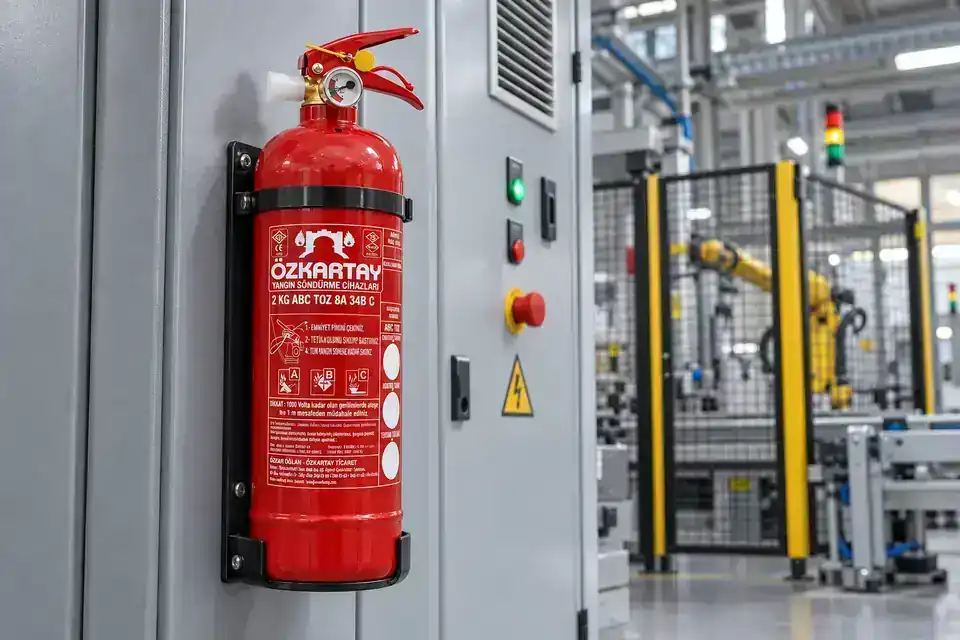
2 kg Özkartay dry-chemical powder fire extinguisher for first response before a fire grows. The powder is considered for Class A solids, suitable Class B flammable liquids and Class C gases, and electrical risks where compatible with the fire type. Select the device type and extinguishing agent for the facility processes, combustible materials, fire risks and protected area.
01
Selection, placement and maintenance
Selection considers the product function, the protected risk and operating conditions together. These steps support the site survey and quotation.
Risk and powder option
Check A, B and C suitability on the device label. Assess electrical-use conditions separately and consider powder residue and visibility in spaces with sensitive equipment or many occupants.
Accessible placement
Plan a visible, accessible location protected from impact. Assess handling, user training and the nearby escape route together.
Initial response and evacuation
Extinguisher use belongs in a trained-personnel response plan for an incipient incident with a safe escape route. Evacuation takes priority if fire grows, smoke becomes heavy or escape is threatened.
Inspection, recharge and return to service
Inspect the body, pin/seal, fitted pressure indicator and discharge hardware. Establish servicing and recharge against model instructions and applicable requirements, with qualified service after use or loss of charge.
02
Applications and site planning
These examples show why placement and equipment requirements can differ between facilities using the same product.
Production and storage areas
- Site requirement
- Stored materials, equipment and site movement can change together.
- Application approach
- Locate the extinguisher against the actual hazard points and access route.
Workshops and technical spaces
- Site requirement
- Mixed materials and equipment sensitive to powder residue.
- Application approach
- Assess the powder option against the label and equipment sensitivity.
03
Pre-quotation checklist
Scroll the table horizontally to view every column.
| Check item | Product / application | Information to assess |
|---|---|---|
| Capacity | 2 kg | Agent quantity, assessed with fire rating and placement |
| Extinguishing agent | ABC dry chemical powder; 40% or 90% options | Label, fuel and use conditions |
| Arrangement | Hand-operated extinguisher | Handling, access and training |
| Maintenance | Service against model instructions | Body, charge and discharge hardware |
Suitable selection matches capacity, agent and arrangement to the actual facility risk. We can assess survey, placement and servicing together to define this product’s role in your operation.