
Design and installation guide
2 kg carbon dioxide (CO₂) extinguisher: selection and application guide
CO₂ extinguishers are assessed for suitable spaces with liquid risks and electrical equipment. The absence of powder or foam residue may support selection, alongside ventilation, possible re-ignition and user training.
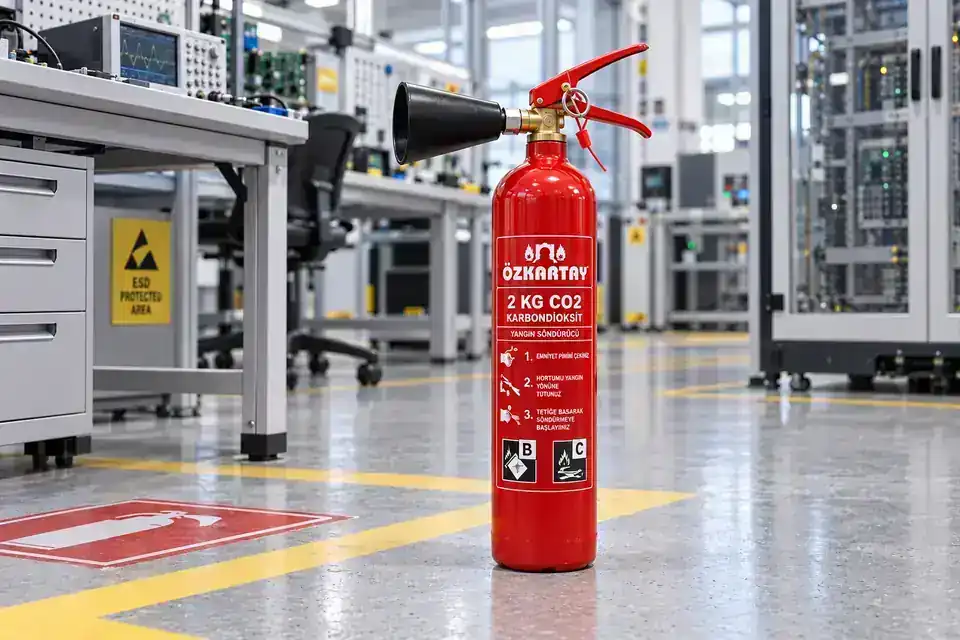
2 kg carbon-dioxide fire extinguisher for first response in areas containing electrical and electronic equipment. Because CO₂ is electrically non-conductive and leaves no solid residue, it is considered for panels, computers, power supplies and similar risks. Selection should follow the fire type and protected area.
01
Selection, placement and maintenance
Selection considers the product function, the protected risk and operating conditions together. These steps support the site survey and quotation.
Space and user safety
CO₂ accumulation can create a hazard in enclosed or poorly ventilated spaces. Assess the use scenario, escape route and manufacturer instructions together, including warnings about equipment that cools during discharge.
Accessible placement
Plan a visible, accessible location protected from impact. Assess handling, user training and the nearby escape route together.
Initial response and evacuation
Extinguisher use belongs in a trained-personnel response plan for an incipient incident with a safe escape route. Evacuation takes priority if fire grows, smoke becomes heavy or escape is threatened.
Charge and service checks
Check the charge using the service method for the selected CO₂ device; do not assume every CO₂ extinguisher has a gauge. Inspect the cylinder, trigger-operated extinguisher valve, insulated CO₂ discharge horn and handling arrangement together. Refer a used extinguisher for qualified service before returning it to use.
02
Applications and site planning
These examples show why placement and equipment requirements can differ between facilities using the same product.
Production and storage areas
- Site requirement
- Stored materials, equipment and site movement can change together.
- Application approach
- Locate the extinguisher against the actual hazard points and access route.
Electrical equipment spaces
- Site requirement
- Residue sensitivity and ventilation needs.
- Application approach
- Assess the device together with ventilation and re-ignition risk.
03
Pre-quotation checklist
Scroll the table horizontally to view every column.
| Check item | Product / application | Information to assess |
|---|---|---|
| Capacity | 2 kg | Agent quantity, assessed with fire rating and placement |
| Extinguishing agent | Carbon dioxide (CO₂) | Label, fuel and use conditions |
| Arrangement | Hand-operated extinguisher | Handling, access and training |
| Maintenance | Service against model instructions | Charge, valve and discharge hardware |
Suitable selection matches capacity, agent and arrangement to the actual facility risk. We can assess survey, placement and servicing together to define this product’s role in your operation.