
Design and installation guide
Foam suppression systems for industrial flammable-liquid protection: operating principles, engineering and facility solutions
Foam fire suppression systems provide surface coverage, cooling and re-ignition control, especially for Class B flammable-liquid fires. Some fuels that do not mix with water and are less dense than water can continue burning on its surface; a suitable foam blanket creates a barrier between the fuel surface and the air.
Özkartay foam suppression solutions are designed around the fuel chemistry, facility process, protected area and fire scenario. Foam concentrate, expansion class, proportioning, tank capacity, pipework and discharge devices are assessed together.
01
How do foam suppression systems work?
Water and foam concentrate are mixed at the specified proportion. The solution combines with air through suitable generators, sprinklers or nozzles and is applied to the fire area. Three main effects contribute to fire control.
Coverage and an oxygen barrier
The foam blanket covers the fuel surface and limits contact between fuel vapour and oxygen in the air. Suitable application and sufficient foam supply help maintain a continuous blanket.
Cooling
Water contained in the foam bubbles absorbs heat and helps cool the surface. This effect is considered alongside fire control and the continued protection of the foam blanket.
Vapour suppression and re-ignition control
A stable foam blanket helps reduce fuel-vapour release and limit re-ignition. Concentrate compatibility with the fuel and the durability of the blanket are important to sustaining this protection.
02
Foam types, expansion classes and engineering selection
Concentrate type and foam expansion class are separate selections. AFFF, AFFF-AR, synthetic or fluorine-free (NFF / F3) concentrate must be compatible with the protected fuel and the chosen proportioning and discharge equipment. Design parameters are established from the actual project data.
Foam concentrate types
- AFFF — aqueous film-forming foam
- Developed to form an aqueous film alongside the foam blanket on suitable hydrocarbon fuels such as gasoline, diesel and crude oil. Fuel and application suitability are checked against the selected concentrate technical data.
- AFFF-AR — alcohol-resistant foam
- Formulations for alcohols, ketones and suitable other polar solvents create a protective barrier against fuel destruction of the foam blanket. Suitability and proportioning for each chemical are verified from the product data.
- Synthetic concentrates
- Applications for synthetic concentrates depend on the formulation and equipment compatibility. High-expansion generators and volume-filling applications use suitable synthetic concentrates developed for that purpose.
Foam expansion classes
- Low-expansion foam
- Considered for surface protection such as storage tanks, outdoor fuel areas and foam monitors. Wind, discharge reach and the ability to deliver foam to the fuel surface are considered in the discharge design.
- Medium-expansion foam
- May be considered for fuel spills in tank bunds, containment areas and chemical storage sites. Application equipment and blanket durability are selected for the fuel and site conditions.
- High-expansion foam
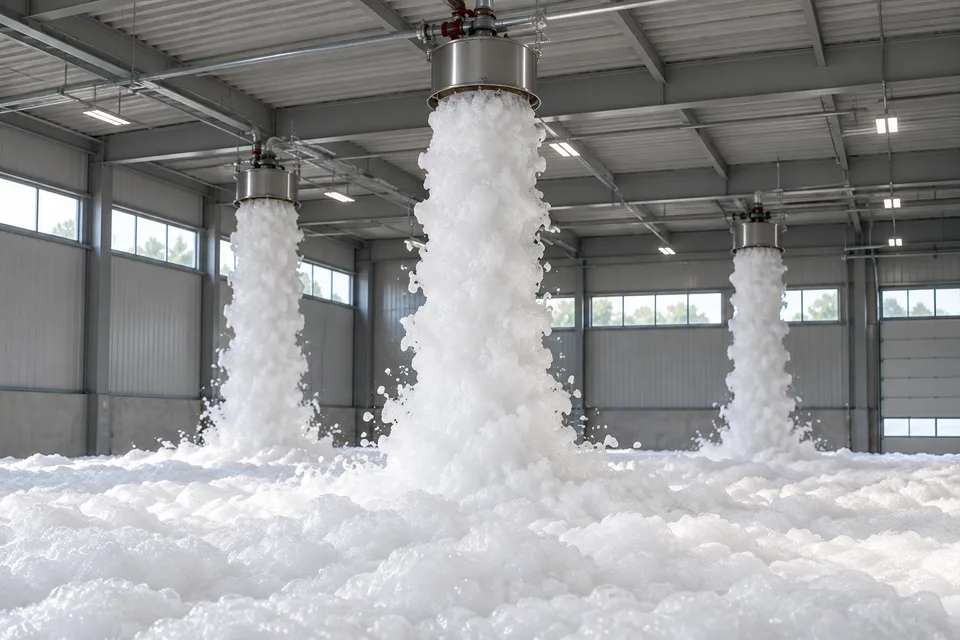
- Helps control fire by filling suitable enclosed or bounded spaces with foam. The protected volume, filling time, air supply, ventilation and foam losses are assessed in the design; complete removal of oxygen is not assumed.
Engineering selection criteria
- Fuel, process and protection scope
- The design identifies hydrocarbon or polar-solvent fuels, storage arrangements, potential spill areas and the surface or volume to protect. Concentrate and expansion class are selected for this fire scenario.
- Proportioning and tank capacity
- Proportioning follows the selected concentrate technical data. Water and concentrate demand are calculated from the required flow and application duration, with tank capacity and proportioning arrangements sized together.
- Hydraulic design and equipment compatibility
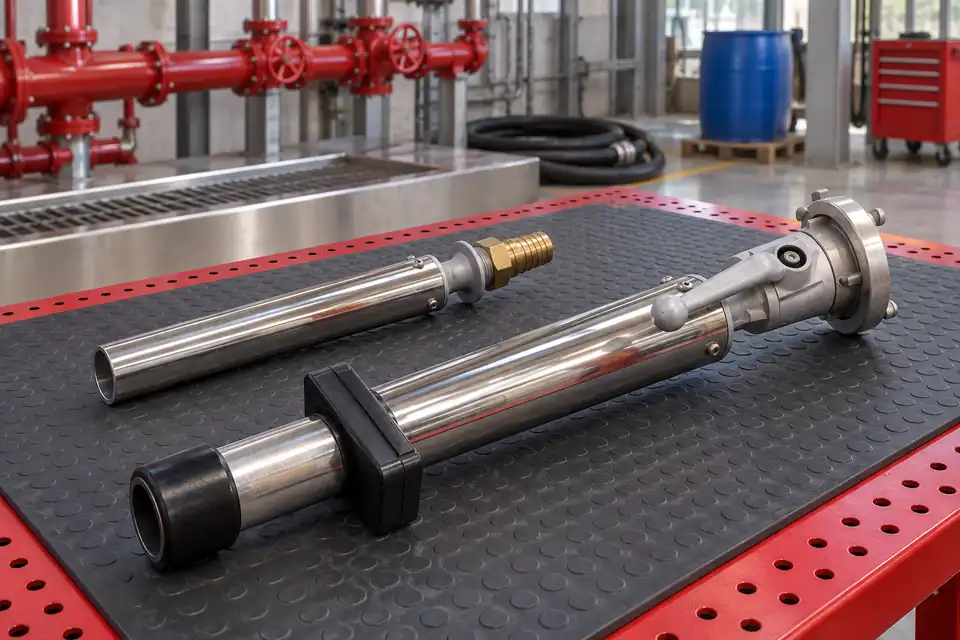
- Pipe sizes, pressure losses and flow at discharge points are checked through hydraulic calculations. Compatibility of proportioning equipment, generators, foam chambers, sprinklers and nozzles with the selected concentrate is verified against manufacturer data.
03
Foam suppression solutions for different facilities
Flammable-liquid hazards, layout and operating conditions differ by facility. The foam application method is established from the fuel characteristics and the fire scenario for the protected area.
Petroleum, chemical and fuel loading/storage areas
- Fire hazard
- Fuel storage tanks, leaks at loading arms and ignition hazards in spill containment areas.
- Application approach
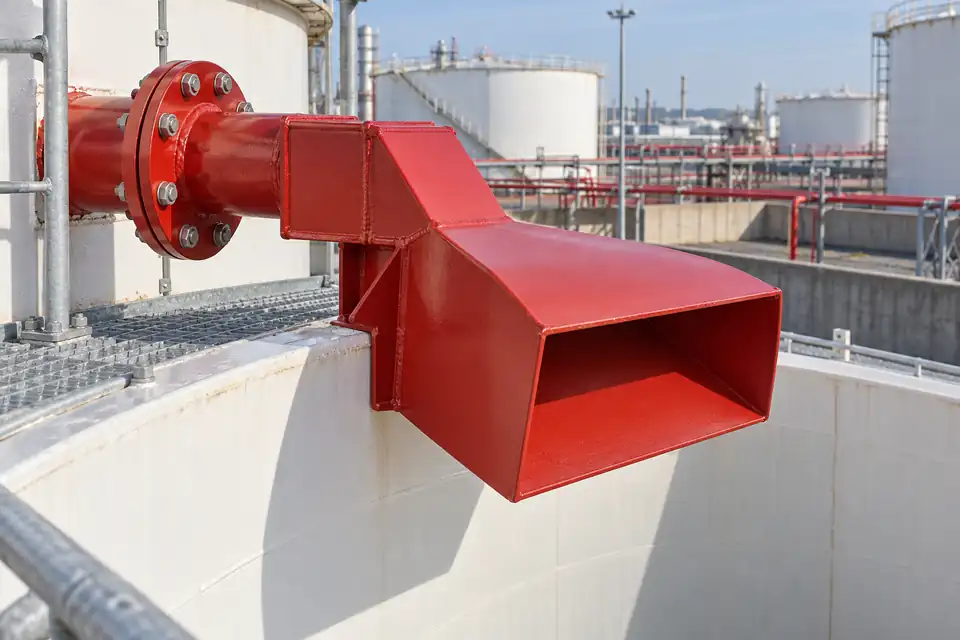
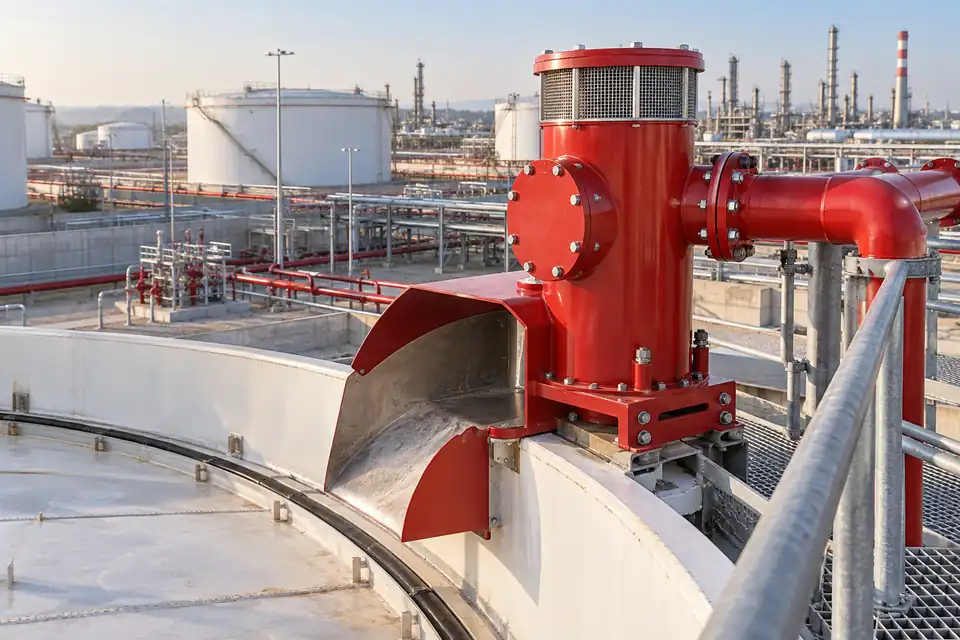
- Foam chambers and floating-roof rimseal protection are considered according to the tank type. Foam monitors for loading racks and suitable discharge lines for spill containment areas are designed for the project.
Aircraft and helicopter hangars
- Fire hazard
- Aviation fuel, ignition sources during maintenance and large high-ceiling spaces.
- Application approach
- The hangar scenario may call for high-expansion generators with suitable synthetic concentrate or low-expansion monitor/nozzle arrangements directed at fuel surfaces below the wings. The protected volume and application duration are established by the design.
Paint and chemical manufacturing facilities
- Fire hazard
- Flammable-liquid hazards involving solvents, resins and chemical process tanks.
- Application approach
- Select chemical-compatible alcohol-resistant NFF concentrates with documented environmental properties for polar solvents. Automatic foam sprinkler or nozzle lines are designed for the protection needs of the production area.
Shipyards, piers and marinas
- Fire hazard
- Fuel transfer and storage, outdoor wind exposure and corrosion in the marine environment.
- Application approach
- Remote-controlled foam monitors and suitable discharge arrangements are considered for protected fuel areas. Materials such as brass or stainless steel are selected for the marine environment and chosen concentrate; when seawater is used, concentrate and equipment compatibility are checked separately.
04
Foam suppression design options by facility type
Scroll the table horizontally to view every column.
| Facility / area type | Foam concentrate selection | Expansion class | Discharge equipment |
|---|---|---|---|
| Petroleum and chemical facilities | Fuel-compatible AFFF / AFFF-AR | Low expansion | Foam chamber / rimseal protection |
| Fuel loading and storage areas | Fuel-compatible AFFF / AFFF-AR | Low / medium expansion as designed | Foam monitor / spill-protection lines |
| Aircraft and helicopter hangars | Expanded foam with a special concentrate selected for the combustible material | High / low expansion by system design | High-expansion generator / low-expansion monitor-nozzle |
| Paint and chemical manufacturing | Chemical-compatible NFF with documented environmental properties | Low / medium expansion as designed | Foam sprinkler lines / nozzles |
| Shipyards, piers and marinas | AFFF / AFFF-AR compatible with fuel and water supply | Low expansion | Remote-controlled foam monitors |
The table supports preliminary project selection. Final concentrate, expansion class, proportioning and discharge equipment are selected by considering the fuel, site conditions, manufacturer data and applicable design standard together.
Foam suppression protection objectives are addressed by designing a suitable concentrate, hydraulically sized pipework and discharge devices appropriate to the fuel chemistry as one system. Özkartay brings these components together for the facility process and fire scenario.