
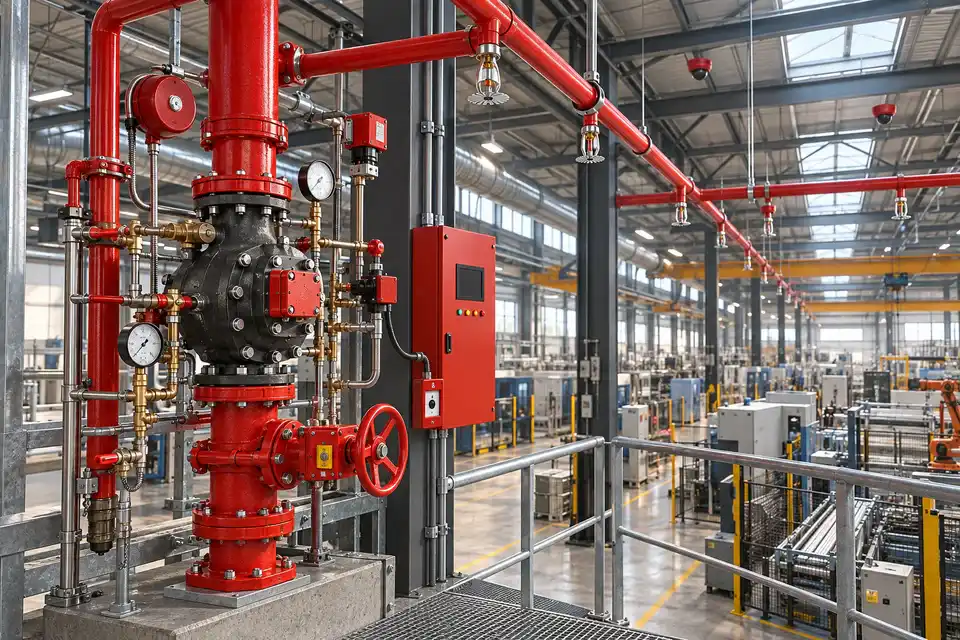
 Deluge sprinkler system
Water-based suppression systems
A sprinkler, pipework, control and water-supply system designed for the facility risk and operating conditions.
Explore the design and installation guide
Catalogue options
Systems
Design and installation guide
Water-based fire suppression: system selection, hydraulic design and installation
Water-based protection brings together a water supply, fire pumps, pipework, controls and sprinklers. Building floor area alone is not a design basis: occupancy, stored materials, ceiling and rack heights, and ambient temperatures all inform the selection.
Özkartay designs wet-pipe, dry-pipe, preaction and deluge arrangements around the facility’s risks. Sprinklers, valves and pumps are selected as a coordinated system against the approved design and calculated water demand.
01
How is a water-based system designed?
Site data, the water supply and operating conditions are brought together in one design package.
Establish the hazard and occupancy
Review the process, combustible materials, packaging and storage arrangement. Changes to racks or production processes can require reassessment of existing protection.
Water supply and hydraulic calculations
Measure available water flow and pressure. Calculate pipe losses for the design area to size pumps, storage and pipework; one pressure value cannot describe every installation.
Sprinkler positioning and obstructions
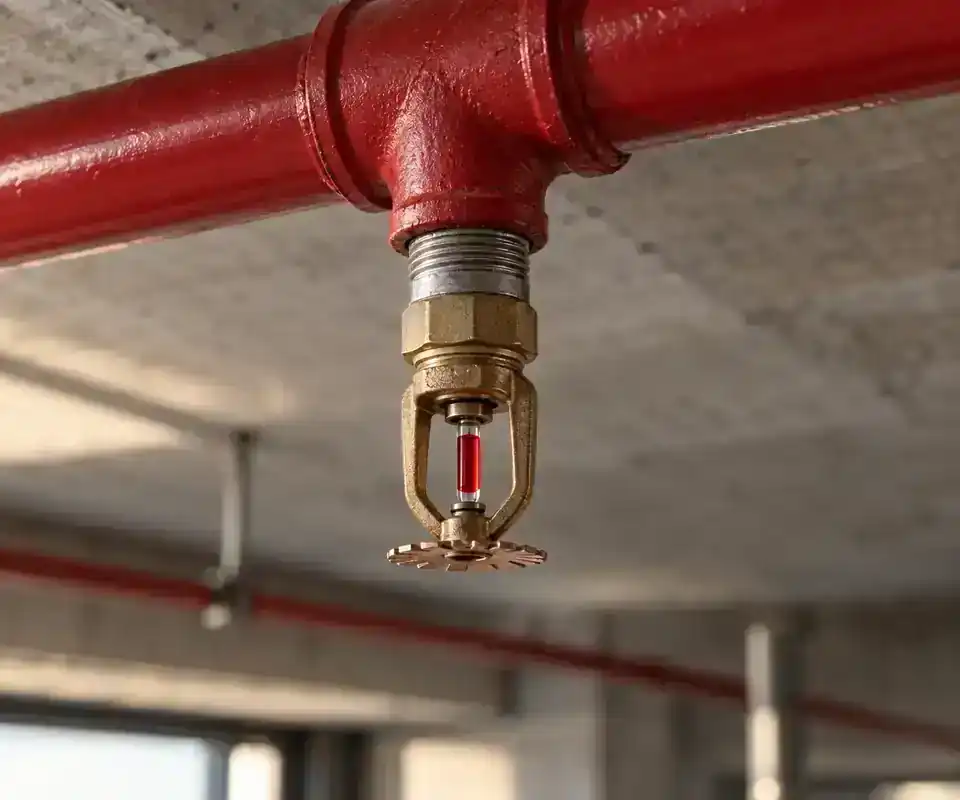
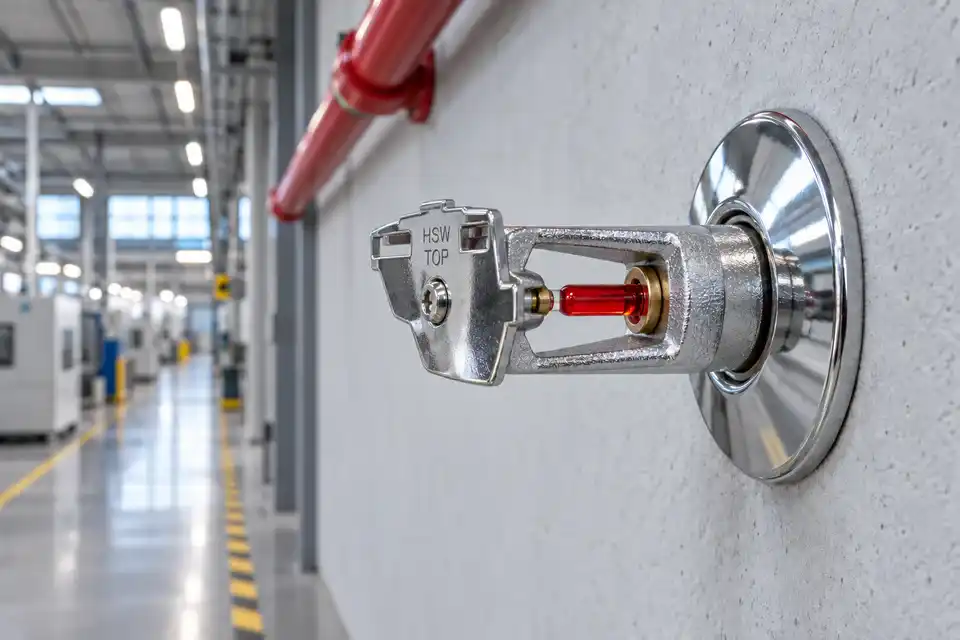
Select sprinkler type and positions around ceilings, beams, ducts, racks and the protected materials. Temperature rating, K-factor and coverage are checked against the selected sprinkler’s technical documentation.
Detection and control sequence
Define valve supervision, waterflow alarms, pump controls and any detection-based release sequence. Make mechanical and electrical interface responsibilities explicit.
Testing, commissioning and records
Complete leakage, drainage, alarm and performance checks after installation. Record measurements, as-built drawings and maintenance points in the handover package.
02
Four principal sprinkler arrangements
Select the arrangement around freezing conditions, unwanted water discharge and the required response.
Wet pipe
- Operation
- Pipework contains water. Discharge occurs through automatic sprinklers that open in response to heat.
- Selection condition
- Consider for spaces without freezing exposure, checking conditions along the entire pipe route.
Dry pipe
- Operation
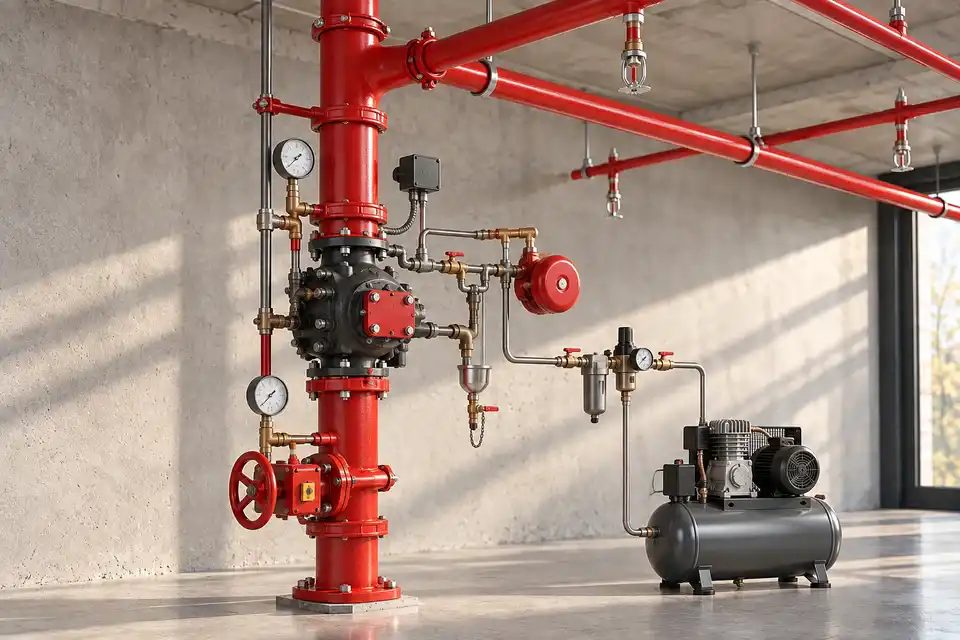
- Pipework contains pressurised air or nitrogen. An opening sprinkler causes pressure to fall and the dry valve admits water.
- Selection condition
- For freezing exposures, consider water delivery time, the air supply and pipe drainage together.
Preaction
- Operation
- The relationship between detection, sprinkler operation and valve release depends on the selected single- or double-interlock arrangement.
- Selection condition
- Consider where unwanted water discharge is a concern; detection faults and system supervision are part of the design.
Deluge
- Operation
- Uses open nozzles or open sprinklers. When the release sequence opens the valve, water reaches the discharge devices throughout the served zone.
- Selection condition
- For rapid fire spread or exposure cooling, assess zone water demand and drainage capacity specifically.
03
Design approaches by facility type
The same system family can require different layouts and water demand in different facilities.
Factories and production areas
- Site condition
- Machine layouts, ceiling obstructions and process changes.
- Design approach
- Plan hazard-appropriate sprinkler positions, accessible control assemblies and installation coordinated with production.
Logistics and rack storage
- Site condition
- Protection needs vary with commodities, packaging and rack height.
- Design approach
- Design ceiling protection and, where required, in-rack protection from storage data. Review rack changes together with water demand.
Cold and freezing-exposed spaces
- Site condition
- Pipe freezing exposure and potential water delivery delays.
- Design approach
- Evaluate dry or project-appropriate preaction arrangements together with drainage points and the air supply.
Commercial and public buildings
- Site condition
- High occupancy, architectural requirements and evacuation arrangements.
- Design approach
- Coordinate sprinkler selection with the architecture while retaining required coverage and obstruction clearances.
04
System selection comparison
Scroll the table horizontally to view every column.
| System | Pipe condition | Key design consideration |
|---|---|---|
| Wet pipe | Water filled | Freezing exposure and sprinkler positioning |
| Dry pipe | Pressurised air / nitrogen | Water delivery time and drainage |
| Preaction | Depends on the selected interlock | Detection, valve release and supervision |
| Deluge | Open discharge devices | Zone flow, release and drainage |
This table is a selection framework. Final design follows site data, equipment approval limits and the standards adopted for the project.
Effective water-based protection combines an adequate supply with suitable sprinklers, pipework and controls. Design, site verification and planned maintenance are parts of the same protection chain.